One of the most prevalent physical complaints throughout the world is back pain occurring in approximately 80% of adults during their lives. Whether you are dealing with a dull ache after sitting at your desk all day or a sharp pain that seems to be getting worse from your last workout, back pain is never fun. Though most recourse to immediate medication, yoga for back pain can be a long-term solution which will mitigate both actual symptoms and its real causes.
In this all-inclusive guide, we will be diving into the science of how yoga heals the spine, what poses are the best remedies for which types of pain and how to practice safely to gain lasting relief.
Yoga is not solely about stretching; yoga is about finding a balance between the flexible and the stable. Persistent back pain is typically the result of two things: tight muscles that pull the vertebrae out of alignment and weak “stabilizer” muscles that are unable to keep them in place.
When you do yoga, you are performing “functional movement.” This helps improve blood flow to the spinal discs and engage the multifidus and transverse abdominis—deep muscles of the core that act as a built-in corset for your back. Yoga, too cuts the production of cortisol (the stress hormone), shown in studies to lower the perceived sensation of pain in those with chronic cases.
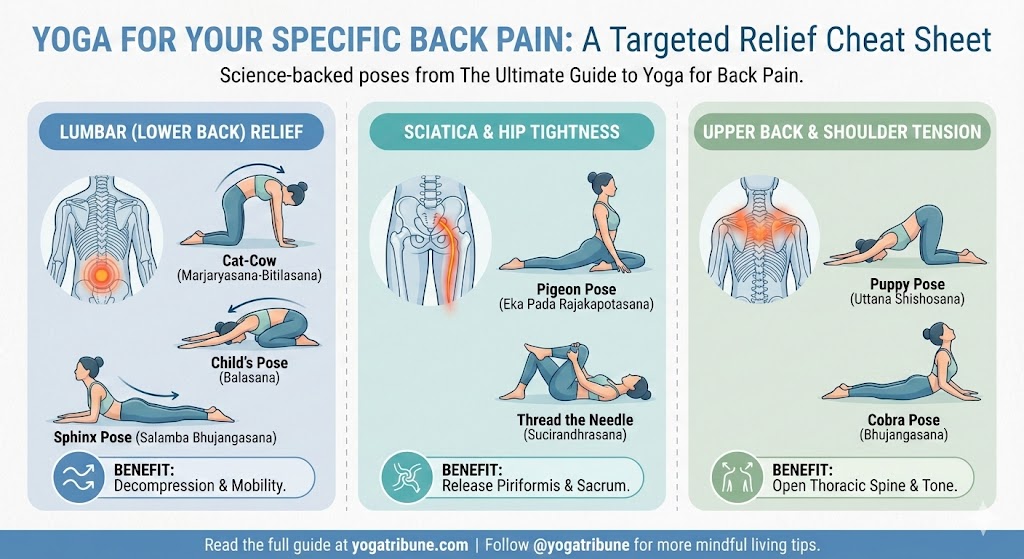
Exercises for Lower Back Pain (LUMBAR RELIEF)
The low back bears the majority of the weight and is also more likely to be injured. These poses are all about decompression.
Cat-Cow (Marjaryasana-Bitilasana): This is what you think of for spinal mobility. When you keep your breath in sync with movements, you are gently massaging the spine and waking up those surrounding muscles.
Balasana (Child’s Pose): A calming posture that stretches the lower back. Push the arms forward and sink back through your hips to create traction to decompress lumbar vertebrae.
Sphinx Pose (Salamba Bhujangasana): If you suffer from “flat back” syndrome, this posture helps to reestablish the natural inward curve in your lower back without going full on Cobra.
Yoga poses for Sciatica and Hip Tightness
Frequently, “back pain” is actually referred pain originating from tight hips or a pinched sciatic nerve.
Pose: Pigeon Pose (Eka Pada Rajakapotasana): This focuses on the piriformis muscle. When this muscle is tight, it bears down on the sciatic nerve, producing that shooting pain down the leg.
Thread the Needle (Sucirandhrasana): A gentler, supine variation of Pigeon for those with delicate knees. It is an opener of the outer hips and helps to release tightness in the sacrum.
Upper Back and Shoulder Tension-releasing Poses
In the era of “Tech Neck,” it is no wonder that our thoracic spine which runs from below your neck to just above your low back gets so stiff and rounded.
Puppy (Uttana Shishosana): This is a nice transition from child’s pose to downward dog. It feels amazing for opening the shoulders and that “stiff” mid back!
Cobra Pose (Bhujangasana): This pose will also tone the erector spinae, allowing them to help you sit and stand with good alignment and avoid that upper-back slump that creates knots.
The Importance of Core Stability
It’s impossible to have a strong back with a weak front. Your back muscles have to work harder to keep you upright when your abdominal muscles are weak, which can lead to tiredness and spasms.
To avoid recurrence pain, try Bird-Dog (Parsva Balasana). 16 You teach your nervous system to stabilize the spine while on the move by elongating the opposite arm and leg, yet keeping a straight spine. This is a basic ‘prehab’ move physical therapists and yogis use.
The Safety Lecture: When Not to Do a Pose
As much as yoga heals, the poor alignment can further injure. Follow these 2026 safety standards:
Listen to ‘Sharp’ vs. ‘Dull’: A dull, achy stretch is typically fine. Any sharp, electrical or stabbing feeling is an indication to discontinue the patch at once.
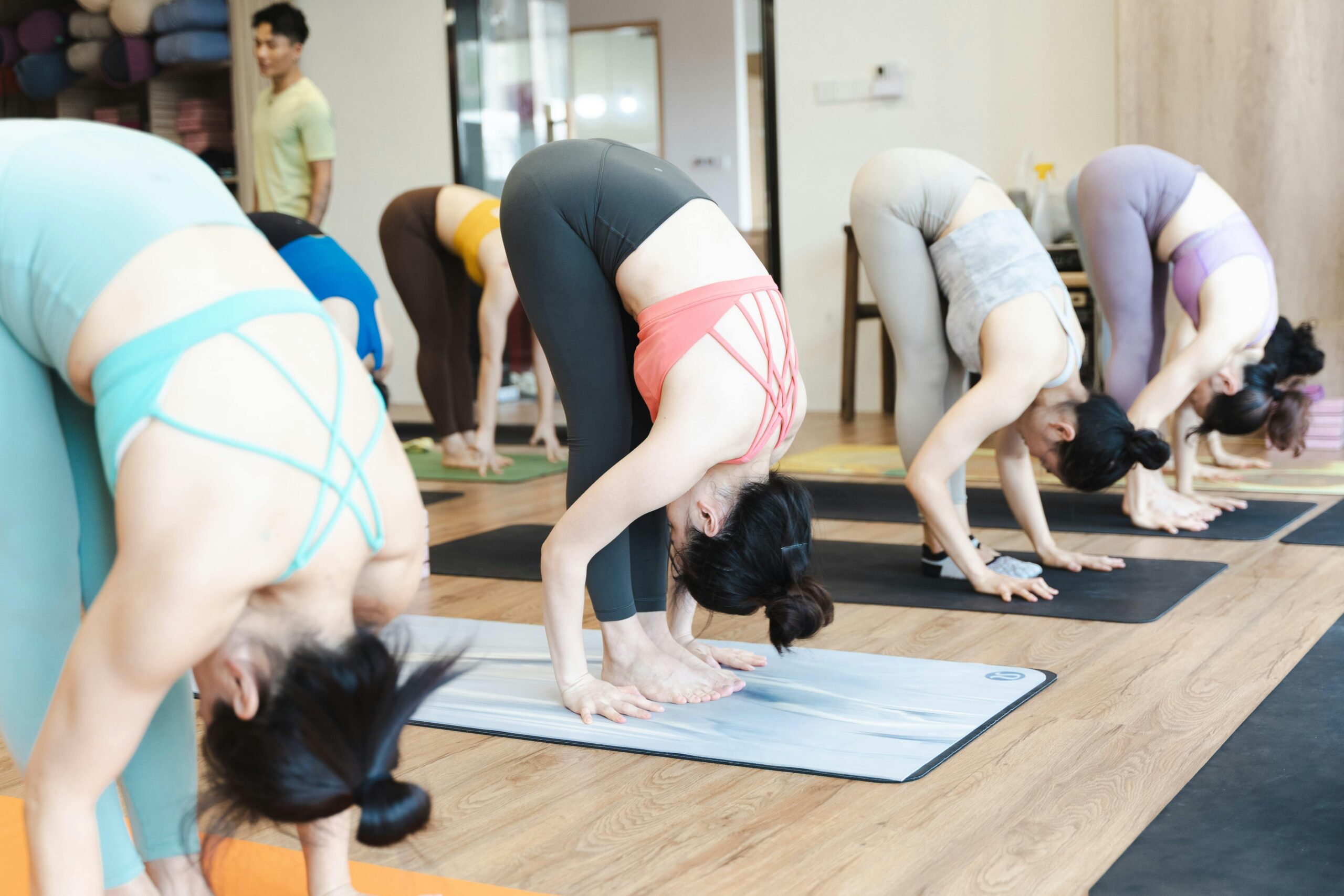
For Herniated Discs: Modify for Herniated Discs If you’re dealing with an already known disc herniation, steer clear from deep forward folds (such as touching your toes) as these may push the disc further into an awkward position. Stick to “neutral spine” poses.
Use Props (Don’t Be Afraid): Never be embarrassed to use blocks or bolsters. This eventually alleviates the tension on your lower back as you work towards depth.
Creating a Consistent Routine
Consistency is king. You’ll get more out of 10 minutes of yoga a day than you will out of one 90-minute class every two weeks.
A Simple 10-Minute Daily Sequence:
Minutes 1-3: Cat-Cow and child’s pose (Warm-up)
Minutes 4-6: Bird-Dog and Bridge (Activation)
Pigeon Pose or Sphinx (Deep Release) Minutes 7–9
Minute 10: Savasana (Neural Integration)
Conclusion
Yoga for back pain is the process of re-learning your body’s natural alignment. When you mix the physical stretches with conscious breathing, you are solving the problem at its root instead of just covering up symptoms. It does not matter whether you are a beginner or more advanced themselves, the goal is that you share: Suppleness and Strength of your Spine without Pain