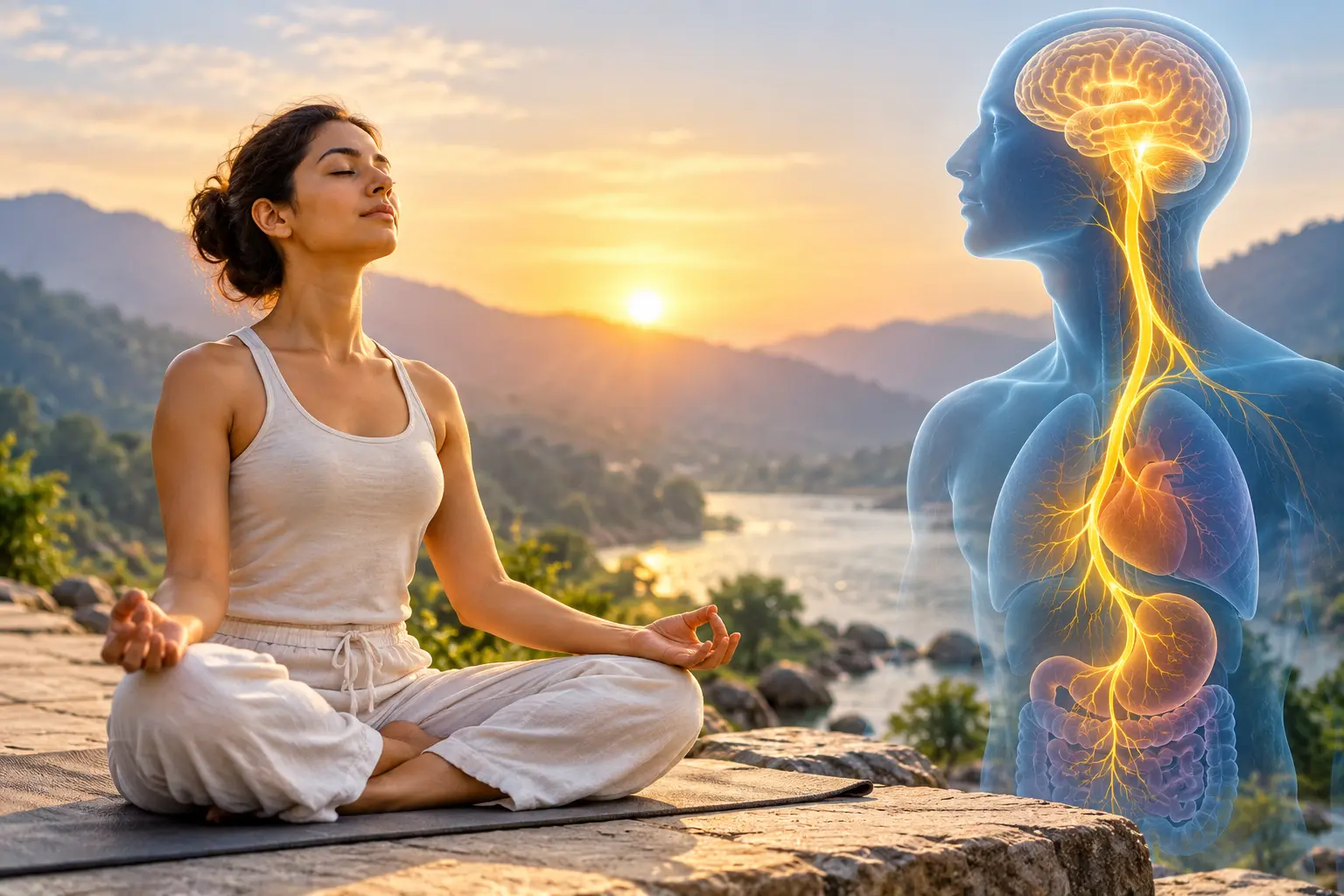
The vagus nerve is one of the most widely distributed nerves in the body which originates in the brain and extends to various organs, including the heart, lungs, chest, abdomen, and digestive tract. It can be imagined as a pathway or communication channel through which signals travel either from the brain to the body or from the body to the brain.
Another factor that makes the vagus nerve so important is its role in the parasympathetic nervous system, which is also called as the “rest and digest” system of the body. Vagus nerve is key driver of parasympathetic nervous system and serves two main functions. First, sensory signals travel along the nerve from the body’s organs to the brain, providing information about the body’s condition. While motor signals travel from the brain through the nerve which regulates heart rate, promote digestion, reduce inflammation, and activate the body’s rest-and-digest responses.
When signalling of Vagus nerve becomes impaired, reduced or dysregulated then communication between the brain and body organs became distorted and inefficient. This impairment in the signalling process is called disruption, and it adversely affect the heart rate, breathing, digestion, inflammation, and resilience to stress. As a result returning to calm state after the fight and flight state becomes difficult.This condition is called Vagus nerve dysfunction. In this condition one experience the problem related to digestive system, heart rate irregularities, inflammation, ear, nose, and throat (ENT) problems, and psychological conditions such as anxiety and stress. To restore balance in the body, vagus nerve signalling must be improved.
Chronic stress and inflammation are two main reasons that contribute to poor Vagus nerve function in many people. Chronic stress is a psychological factor, whereas long-term inflammation is a physical one. The body exhibits temporary inflammatory response to stress, injury, infection, and unhealthy habits. However, the Condition can worsens more when inflammation persists for a long time.
Vagus nerve dysfunction is not a disease but rather an imbalance in the body’s normal functioning. Some other reasons responsible for it includes injury, nervous system imbalances, and immune disorders. Chronic stress alone is a major yet often underrated factor. In this article, we analyse vagus nerve dysfunction and explore how stress management can help improve it and restore balance.
In parasympathetic nervous system, our body moves into state of rest and deeply repair itself. On the other hand, in the sympathetic nervous system, which is popularly known as fight or flight mode. The body’s response to either confront a challenge or run away from a threat corresponds to a state of stress.When it is activated, the body begins directing energy to different organs. Heart rate and blood pressure increase, the lungs expand to take in more oxygen, blood flow to the arms and legs, and the adrenal glands release the cortisol hormone. In this way, the body prepares itself to meet the challenge. This is a normal process, and the body should completely move out of the fight-or-flight mode once the threat has passed. However, this switching is not as simple or automatic as it may seem. Emotionally stable and balanced individuals naturally exit the fight-or-flight state and return to a calm and relaxed state, whereas stressed or angry individuals may take longer. Anger, fear, intrusive thoughts, anxiety, and stress can create havoc in the body and mind. The mind jumps from one thought to another, or the same thought strikes repeatedly with increasing intensity each time. With each occurrence, feelings of fear and irritation intensify, leading to anxiety. Sleep remains miles away.
Such mental behaviour is not new to humankind. Both Ancient and modern humans experience these emotions, but modern individual often struggle more in dealing and overcoming the dissatisfaction arise from various stressful situation. As a result takes considerably longer in returning to calm and balance state.
Due to stress their vagus nerve signalling gets impaired, which give rise to disruption in functioning of important organs and exiting out of fight and flight mode and returning to calm state becomes difficult.
Basically, due to unmanaged emotions, their mind chatters continuously in negative thinking and unable to stop emotions related to anger, grieve, fear, pride or isolation in the body even when, no threat or dissatisfying circumstance really exist.
Hence to exit out of this fight and flight mode quickly, the undesirable energy generated by negative emotions must be controlled so that vagus nerve signalling can be restored. Yog Asana Deep breathing, cold exposure ,modern therapies, specialized devices, simple life hacks and all other such treatments may provide temporary relief, but long-term relaxation should be achieved through deeper form of mediations that help cleanse the mind of negative emotions and promote inner calm and well-being.
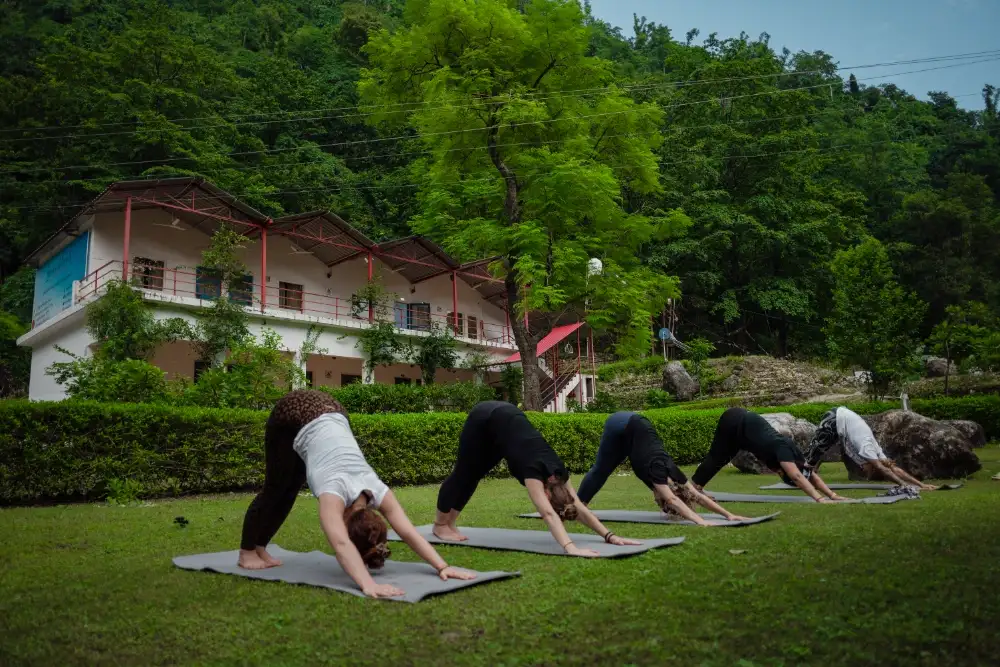
Some traditional and ancient health philosophies emphasize that good heath is achieved through hard work and sweating. Yog asana have proved tremendously helpful in dealing with physical imbalances, including those caused by stress and the improper functioning of organs. They Help to again restore the balance in body.
On the other hand, meditation is that aspect of this philosophy that helps to calm our mind and balance thoughts. The four point meditation method is very helpful in overcoming the stress and restoring the signalling power in the Vagus nerve. They emotionally detox us and reduce the stress.
Emotions are byproduct of our life, and his presence shows we are alive and governed with the ordinary rules of nature. Feeling of insecurity, emptiness, uncontrolled or lack of energy, inability to connect with others, anger, loneliness, craving for love, mental tiredness, shame and such other similar emotions must be understood and placed in proper perspective to enjoy the uncertainties and beauty of life and world.
First screen:- See mind as Lake (3-4 Min)
- Sit comfortably cross leg position as per your choice. You can sit on chair also. But your spine must be straight.
- Breathe through your both nostrils slowly and imagine that your mind is a lake.
- The More restless and turbulent the mind is, the more waves will wreak havoc in this lake.
- Now imagine that someone has dropped a large golden coin into the lake.
- But it is hidden behind the intense intensity of ripples on the surface of lake.
- More the breath becomes calmer and slower, so the surface of the lake. And
Focus became clear beneath the waves.
- Blurred image of the coin became clear as mind became calm and quite
- Don’t try to force yourself, bring yourself calmly back if mind is drifting repeatedly
- When your mind became still and calm bottom of lake is clearly seen and so the golden coin. You experience peace and calmness.
Second screen:- See your Anger (3-4Min)
Now open the eyes and breath through both nostril, slowly and rhythmically sit comfortably in any meditative position.
- Place you hand in the Gyan mudra (gesture of Knowledge).
- Now imagine the incident which makes you angry and irritated. Like you are already late for the meeting and stuck in the traffic jam. Remember what you really feel at that time. How you hurt yourself with anger and irritation.
- Now reimaging the incident again but slightly different instead of becoming angry and irritated see yourself calm during the incident
- Hold this picture and replay it 3 or 4 times.
Repeat this mediation regularly after some time there is positive change in your behaviour. Instead of becoming angry and irritated you remain calm in similar situation.
Third Screen:- Give Blessings (4-5Min)
Now slowly come out of this screen and think of the new situation. Take few deep breaths and think of the person who has created a feeling of irritation or anger or anxiousness in you.
Mentally repeat “I forgive (name) and grateful for the lesson that he/she taught me. He/she be happy. He/she be free of disease”
Fourth Screen:-Lotus Mudra (2-3 Min)
In the last part of this meditation which is as important as earlier one.
Now open your eyes and bring your both hands together at your chest in lotus mudra with the fingers vertical and relaxed. Keeping finger top, outer edge of the little finger, base of the hand and outer edge of thumps together such that hollow space is created in between them.
Now slowly move apart the tips of the fingers such that outer edge of little finger as thumps remains together and mentally repeat “i open my heart to this new thinking “
Then slowly bring your fingertips back into the close position repeat this closing and opening several times with affirmation.
If these simple but powerful meditation techniques are practiced on regular basis. It can heal past traumas along with the associated emotional release. In the third screen you may take some extra time. When switch from one screen to another take 4 to 5 deep breaths. It can be perform in morning and night before sleep. Meditation in night before sleep gives very fast and extra ordinary results.